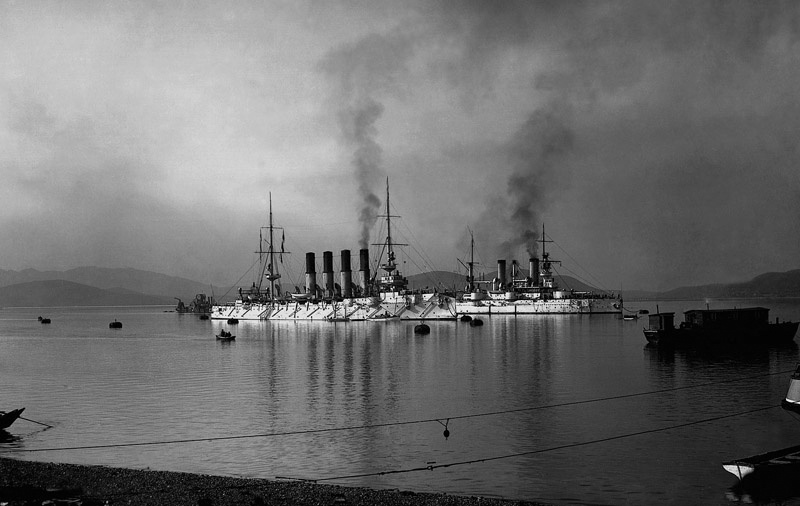
Port-Arthur
Song Stories · Legends of Crimean Tatar Folk Songs · Research by Arsen Bekirov
What is this song
| Title | Port-Arthur Türküsü («Порт-Артур») |
| Genre | Crimean Tatar historical türkü (kiska-küy) |
| Subject | Russo-Japanese War 1904–1905, mobilization of Crimean Tatars |
| Variants | Crimean Tatar, Bashkir, Tatar |
| Status | Folk heritage |
Historical context
The Russo-Japanese War of 1904–1905 — one of the bloodiest conflicts of the early twentieth century — affected the Crimean Tatars directly. In late autumn of 1904, 900 Crimean Tatar reservists were urgently mobilized (according to historian V. E. Vozgrin). Thousands of people from distant Crimean villages were drawn into a war they knew nothing about — thousands of versts from the front line.
The Russo-Japanese War ended in a heavy defeat for Russia. Losses amounted to approximately 50,000 killed (and with wounded and sick, Russia's total losses approached 400,000). These figures are not just statistics: behind each one stood a family, a parting, grief, waiting.
The text of the song
Crimean Tatar variant (from the leylaemir.org portal):
Port-Artur-nynь маллеси,
Не буюктир къалеси.
Йыгъды-алды эвлятларны,
Агълап къалды анеси.
Агълама, анем, агълама, бабам,
Бельки чаре булуныр.
Кечти баарь, кельди кузь,
Агъламакътан шишти козь.
Порт-Артургъа кетемиз,
Сиз сагълыкънен къалынъыз.
Фильджан толу сувмыдыр,
Япон ёлу бумыдыр?
Аман, аман, падишаим,
Этеджегинъ бумыдыр.
Машиналар ягъланды,
Бир-бирине багъланды.
Порт-Артургъа баргъан сонъ
Къылыч-пычакъ къайралды.
Сельби киби боюмыз,
Агълап къалды союмыз.
Порт-Артурдан къайткъан сонъра,
Олур bizim тоюмыз.
Translation
The tears of Port-Arthur —
The fortress is not great.
They are driving away the young men,
The mothers are left weeping.
Don't cry, mother, don't cry, father,
Perhaps a way out will be found.
Summer has passed, autumn has come,
Eyes have gone blind from weeping.
We are going to Port-Arthur,
Stay well.
The cup is full of water —
Can one not swim across the Japanese road?
Save, save, our padishah,
The sound of hooves is not heard after you.
The train cars are coupled,
Tied to one another.
After Port-Arthur
The teeth and knives are unsheathed.
We are thin as reeds,
We ended the battle weeping.
Returning from Port-Arthur,
We will hold our feast.
Analysis
Kuropatkin. In the Bashkir variant of the türkü, General Kuropatkin, commander-in-chief of the Russian army in the Far East, is called "dark-faced," and it is sung: "Kuropatkin betrayed us." These lines are not from the Crimean Tatar text but from the Bashkir-Tatar variant, yet they have become an inseparable part of the song's overall image.
Return. The line "Порт-Артурдан къайткъан сонъра, олур bizim тоюмыз" — "returning from Port-Arthur, we will hold our feast" — is a multilayered metaphor. Literally it promises joy after return, but in the context of the people's historical memory it sounds different: as a hope of returning to where they were exiled from — to Crimea. This interpretation gained particular weight after the deportation of 1944.
After 1944. After the deportation of 1944, the türkü was sung everywhere Crimean Tatars lived. The Kaitarma ensemble, revived in 1957 in Tashkent, included it in its repertoire. During the Soviet era, public performance was restricted, but at home, within the family, mothers sang it to their children — instead of a lullaby, instead of comfort, instead of a story that could not be told openly.
Musical features. In the Bashkir-Tatar variants, the modal foundation is variable pentatonics. The refrain "Ай-ли, Порт-Артур, Була торғайның матур" (Oh you, Port-Arthur, you too were once beautiful) is from the Bashkir-Tatar variant, not the Crimean Tatar original.
Listen: different voices of one song
Compare the historical and modern performances:
Why it matters
Port-Arthur is a song that traveled an extraordinary path: from the grief of mobilization at the beginning of the twentieth century — through enforced silence during the Soviet era — to becoming a symbol of folk memory and return. It was born as the voice of those sent to someone else's war, and became the voice of those expelled from their native land. Each generation invested its own meaning in the song — and each time, the song answered.
Port-Arthur is the third song in the Song Stories series. Here I collect the histories of Crimean Tatar folk songs — where they come from, how they changed, and what lies behind a familiar melody. This is part of a larger mission: to preserve not only the songs themselves, but the memory of how they lived. To be continued.
Related songs:
Yosmam — why one song has nine wandering verses and two destinies
Bizim Taraf — how a cheerful dance song from 1966 became an anthem of longing for the homeland